Showing posts with label INORGANIC. Show all posts

Friday, November 18, 2022

Which is more covalent, AgCl, NaCl, LiCl or KCl?

 Which is more covalent, AgCl, NaCl, LiCl or KCl?


In the above compounds, Cl– anion is common for all, but cations are different. According to Fajan’s rule, the covalent character in ionic compounds depends on the size of cation, anion and charge of both the cation and anion.


Now, the cation with smaller size and high charge has higher polarizing power. That is, they cause polarization of electron charge cloud of an anion to a greater extent.


Which is more covalent, AgCl, NaCl, LiCl or KCl?

Tuesday, May 17, 2022

What is carbon disulfide?


 What is carbon disulfide?


Carbon disulfide is also known as carbon bisulfide, is a neurotoxic colorless volatile liquid with chemical formula, CS2. The IUPAC name of carbon disulfide is methane dithione.


Carbon disulfide is a colorless liquid in purest form and it is light yellow under impure state. Carbon disulfide has pure chloroform like or ether like odor.


What is carbon disulfide?


Tuesday, May 10, 2022

What is carbon black?


 What is carbon black?


Carbon black material is also known as acetylene black, channel black, furnace black, lamp black, and thermal black. It is a black solid with molar mass 12.01 g/mol. The density of carbon black at 20°C is 1.8-2.1 g/cc.


What is carbon black?


Monday, May 2, 2022

What is sodium hydrogen carbonate?


What is sodium hydrogen carbonate?


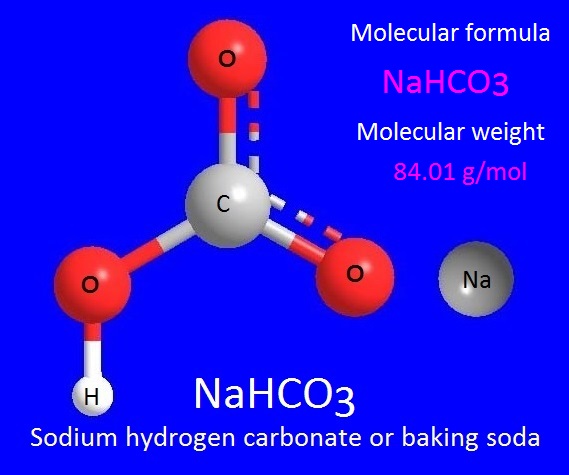
Sodium hydrogen carbonate is also name as sodium bicarbonate, is a chemical compound with molecular formula, NaHCO3. It is also known as an acidic salt or bi salt, which is made from carbonic acid.


What is sodium hydrogen carbonate?

Thursday, December 23, 2021

What is ammonia water in inorganic chemistry?

 What is ammonia water in inorganic chemistry?


Ammonia water means aqueoussolution of ammonia. Ammonia water is also known as ammonia liquor, aqueous ammonia, ammonium hydroxide, aqua ammonia, ammoniacal liquor etc.

It is symbolically expressed as NH3 (aq.) or NH4OH. Ammonia water solution has fishy and highly pungent smell.


What is ammonia water in inorganic chemistry?

Thursday, December 2, 2021

What is meant by aqueous ammonia solution?

 What is meant by aqueous ammonia solution?


Aqueous ammonia or aqueous solution of ammonia, also known as ammonia solution, ammonia water, ammonia liquor, ammoniacal liquor, aqua ammonia and finally ammonium hydroxide, is a solution of ammonia in water.


Ammonia is highly soluble in water. It has been experimentally found that at 273K temperature, 1000 volume of ammonia gas is dissolved in 1 volume of water. Because of ammonia molecules form very strong hydrogen bond with water molecule.


What is meant by aqueous ammonia solution?

Thursday, November 25, 2021

What is ammonium carbonate compound?

 What is ammonium carbonate compound?


Ammonium carbonate is an inorganic salt with molecular formula (NH4)2CO3. It is also known as baker’s ammonia and was a precursor to the more modern leavening agent baking soda and baking powder.


The molar mass of ammonium carbonate is 96.09 g/mol. It is a colorless crystalline solid or white powder with a strong odor of NH3 and has a sharp ammoniacal taste.


What is ammonium carbonate compound?

Wednesday, November 10, 2021

Why do transition elements form complex compounds?

Why do transition elements form complex compounds?


Most of the transition metal atoms or ions have a common tendency to form complex compoundscomplex ions when they are attached to the neutral molecules [such as CO, NO, NH3, H2O] or ions [Cl–, CN–, NO2–].


Why do transition elements form complex compounds?

The above said neutral molecules or ions are called ligand. One or more atoms in ligand are capable to form co-ordinate bond with the atoms or ions of transition metal by sharing of electrons.


Sunday, September 5, 2021

Why are most transition metals used as catalysts?

Why are most transition metals used as catalysts?


Most of the transition metals and their compounds are used as catalyst in the chemical reaction. They are known for their homogeneous and heterogeneous catalytic activity.


Transition metal elements exhibit catalytic property because of their some special characters those are given below.


Why are most transition metals used as catalysts?

Thursday, August 19, 2021

Why do transition metals form colored compounds?

Why do transition metals form colored compounds?


Most of the compounds of transition metals are colored in the solid or in the solution states. In the case of free metal ion, all the five d-orbitals have the same energy. That is, they are degenerate, meaning energetically alike.


But when a uniformly spread negative charge or a ligand approaches towards the d-orbitals of the metal ions, then the electrostatic repulsion between d-electrons and this negative charge would result in uniform increase in the energies of d-orbitals. 


Though, under this condition the five d-orbitals of metal ions would still remain degenerate. Now consider that the negative charge or ligand surrounding d-orbitals of the metal ions gets concentrated in a number of point charges in certain specific positions.


Why do transition metals form colored compounds?

Thursday, August 12, 2021

Why do the melting point and boiling point of transition metals high?

     Why do the melting point and boiling point of transition metals high?


Elements that have partially filled inner (n-1)d sub-shell in the atomic state or in the permanent oxidation state are called transition metal elements. Most of the transition elements are metal.


Transition metals become very hard except Zn, Cd and Hg. They are very much harder than s-block and p-block elements. Generally, transition metal elements have very high melting point and boiling point.


Why do the melting point and boiling point of transition metals high?

The melting points of most of the transition metalselements (except Zn, Cd and Hg) are above 900°C. Their melting point and boiling point are very much higher than s-block and p-block elements.


The transition metals show very high melting point and boiling point due to the presence of very strong metallic bond as well as covalent bond in their metallic crystal lattice.

Saturday, August 7, 2021

Transition-metals-definition-properties-examples


What are transition metals?


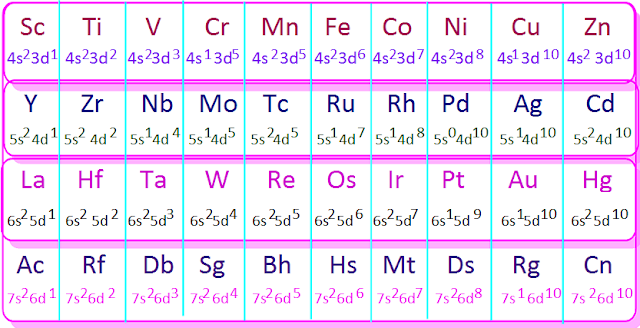
Elements that have a partially filled d-sub-shell in the atomic state or permanent oxidation state are called transition metals. Generally, d-block elements are known as transition metal elements.


The periodic table contains the transition metals between the s-block and p-block elements. The common electronic configuration of outer most valence shell of transition metal elements are (n-d)1-10 ns1-2 .


What are transition metals?

Saturday, July 31, 2021

Ionization-energy-periodic-variation-examples-factors-affecting


What is ionization energy of elements in chemistry?


The term ‘ionization energy’ of elements is a very important topic in chemistry. We can know some important properties of elements from the value or idea of ionization energy.


The ionization energy or first ionization energy of an element is defined as the amount of energy required to remove the most loosely bounded valence electron from an isolated gaseous atom, converting it into unique positive ion.


Since in this process heat energy is supplied to remove electron hence it is an endothermic process.


What is ionization energy of elements in chemistry?

Saturday, July 24, 2021

Ionization-energy-definition-group-13-elements-inert-gas-isotopes


What is Ionization energy or ionization enthalpy?


Ionization energy or first ionization energy is defined as the minimum amount of energy required to remove the most loosely bound electron of an isolated neutral gaseous atom, converting into ion with one unit positive charge.

                             M (g)           +         I.E               ⟶            M+(g)       +      e-

          (Isolated gaseous atom)   Ionization energy     (Gaseous ion)


Units of ionization enthalpy: Since ionization enthalpy is related with energy, hence the unit of ionization potential should the same of energy.

Ionization energy has three types of unit, namely electron volt/atom (eV/atom), kcal/mol, kJ/mol.


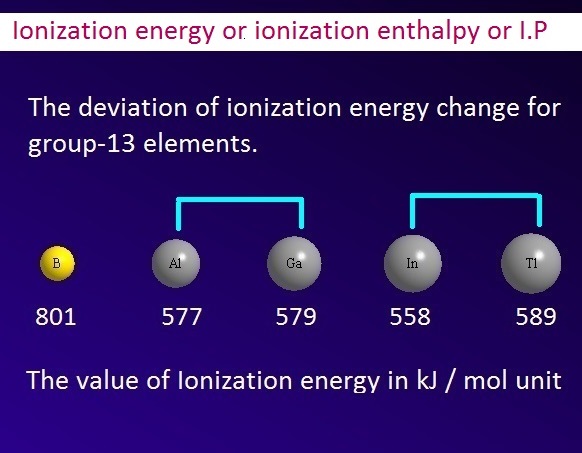
 Why does the order of ionization energy value of group-13 elements not regular?


Generally, the order of ionization energy decreases when we move from top to button along a group.

But, in case of group-13 elements, the order of ionization enthalpy change is not regular. It has been found that the value of ionization energy from B to Al decreases.


Ionization-energy-definition-group-13-elements-inert-gas-isotopes

This is because in this case the combined effect of increasing the size of the atom and the screening effect exceeds the effective nuclear charge of the atom.

Friday, July 16, 2021

Percent of acid present in acid rain


Percent of acid present in acid rain

What is acid rain?

Acid rain literally means acid rain water. The pH value of ordinary rainwater is less than 7.But the pH value of acid rain is between 3.5- 5.6.


This is because non-metallic acid oxides like SO2, NO2 and CO2 are released into the atmosphere due to various natural and man-made causes. Again HCl vapor from the HCl producing plant dissolves in the air.


All of these gaseous elements dissolve in rainwater during precipitation to produce H2SO4, HNO3, H2CO3 and HCl acids and fall to the ground. This is called acid rain.


When some non metallic acidic oxide such as SO2, NO2, CO2 and gaseous HCl etc are mixed with dew, snowfall and rain water, forming sulfuric acid, nitric acid, carbonic acid and hydrochloric acid, come down on the earth from atmosphere, then this phenomenon is called acid rain


What is the contribution of different acids in acid rain?


Outbreaks of acid rain have been observed in different parts of the world. One of them is America, Canada, Russia, China, India etc. However, the incidence of acid rain is much lower in India.


However, the percent of different acids in acid rain is not specified. The percentage of different acids in acid rain can vary from one place to another place.


However, by examining different samples of acid rain, an approximate percentage value of different acids in acid rain has been determined.


It has been experimentally found that, in the creation of acid rain, the contribution of sulfuric acid is 60-65% and that of for nitric acid is 30-35%.

The contribution of other acids (such as HCl, H2SO3 and HNO2) those are responsible for acid rains is1-2%.


  • Percent of acid present in acid rain
  • What is acid rain?
  • What is the contribution of different acids in acid rain?
  • Effect of acid rain on nature


Percent of acid present in acid rain, acid rain, contribution of different acids in acid rain, acid rain definition.


Saturday, December 19, 2020

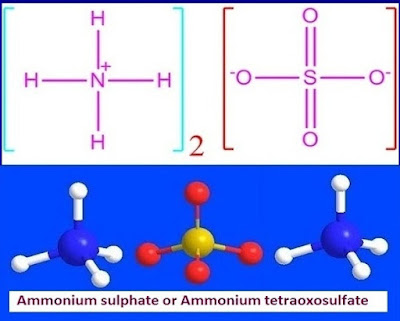
What is ammonium sulfate or (NH4)2SO4?


What is ammonium sulfate or (NH4)2SO4?


Ammonium sulfate is an inorganic compound with chemical formula, (NH4)2SO4. It is nitrogen as well as sulfur containing manure and is predominantly used in agriculture.


Ammonium sulfate is also known as ammonium tetraoxosulfate, diammonium sulfate, mascagnite, dolamin, actamaster, sulfuric acid diammonium sulfate etc.


What is ammonium sulfate or (NH4)2SO4?


It is fine white hygroscopic granules or crystals and soluble in water but insoluble in acetone, ether or alcohol.


The solubility of ammonium sulfate in water increases with increase in temperature. The density of ammonium sulfate is 1.76 g/cc and it melts at 508 to 533K.


Friday, December 11, 2020

What is urea?


What is urea?


Urea is a very notable organic compound with chemical formula CO (NH2)2. Urea is also known as carbonyldiamide, carbamide, carbonyldiamine etc.


Urea is considered as the first organic compound that synthesized by Friedrich Ohler, in 1828, from inorganic compounds, NH4CNO.


                   NH4CNO   ⟶  CO (NH2)2


It is odorless white solid and highly soluble in water. Solubility in water, 1.08 g/ml at 293K and solubility increase with increasing temperature.


What is urea?


Urea is also soluble in glycerol and ethanol solvent. The solubility of urea in glycerol is 0.5 g/ml and in ethanol is 0.05 g/ml.


The density of urea solution is 1.31 g / ml. Melting point range of urea 406K to 408K.


Monday, November 30, 2020

What is ammonia and bleach?


What is ammonia and bleach?


Ammonia

Ammonia and bleach are both inexpensive and effective household cleaners.  

Household ammonia is a solution of NH3 in water, and is used as a general purpose cleaner for many surfaces. 


Like bleach, ammonia is also an effective household item cleaner. Ammonia is also a great cleaner.


What is ammonia and bleach?

Approximately 5% to 10% ammonia solution is usually used as household cleaner.


Household ammonia is usually 70% water, 30% ammonium hydroxide (H2O + NH4OH). Like bleach, ammonia also acts as a disinfectant and kills germs.


Monday, November 9, 2020

What is nitric acid (HNO3) in chemistry?


What is nitric acid (HNO3) in chemistry?


There are seven oxo acids of nitrogen are known. Nitric acid is one of them with molecular formula HNO3. Nitric acid is a highly corrosive mineral acid. 


Most of the metals and non metals are soluble in nitric acid. For this reason, nitric acid is also known as aqua fortis, its mean ‘strong water’.


What is nitric acid (HNO3) in chemistry?


 Pure nitric acid is a colorless liquid at room temperature, but older sample of nitric acid may be yellow or reddish brown color. It is suffocating and also acrid smelling acid. 


It is smoked in humid air. The melting point of pure HNO3 is 231K and the boiling point of pure nitric acid is 355.6K.

Monday, October 12, 2020

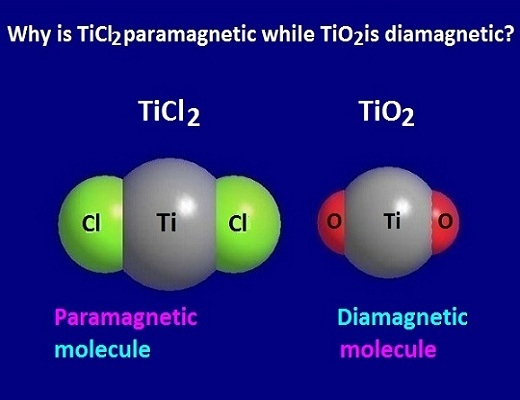
Why is TiCl2 paramagnetic while TiO2 is diamagnetic?


Why is TiCl2 paramagnetic while TiO2 is diamagnetic?


Paramagnetic and diamagnetic character of substance depends on the number of unpaired and paired electrons occupied by that substance. 


Any substances those contain number of unpaired electrons are called paramagnetic substances. On the other side, if the substance does not contain any odd electrons, is called diamagnetic substance.


Why is TiCl2 paramagnetic while TiO2 is diamagnetic?